CODE 2026: Hackathon Weekend
The final weekend of this year's co-creation trajectory
From Friday 10 to Sunday 12 July, the CODE participants came together at IMPAKT in Utrecht for the final weekend of this year’s co-creation trajectory. After months of workshops, discussions, and independent development, the seven groups spent the weekend finalising their projects and sharing them with an external audience for the first time.
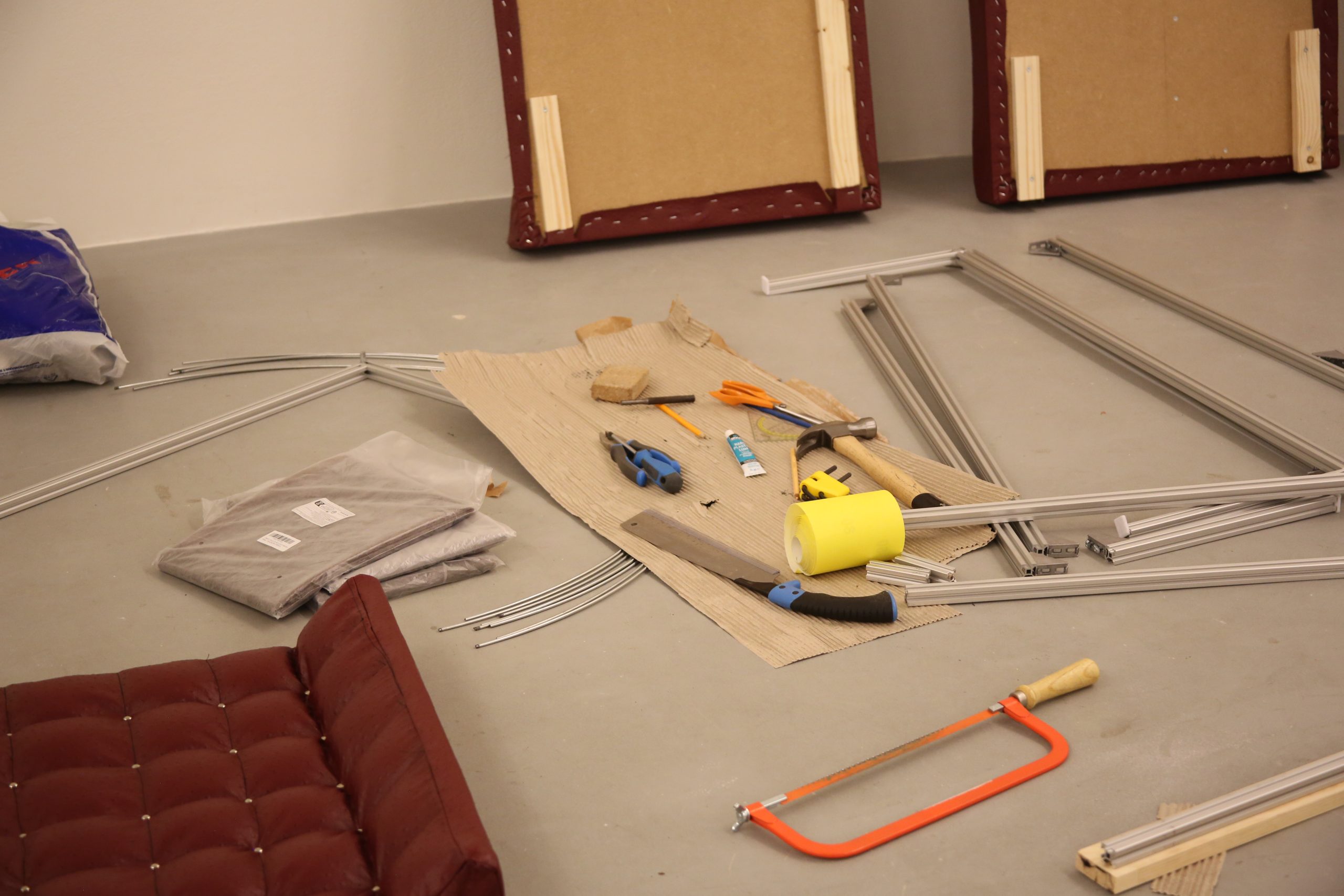
The Hackathon opened on Friday with a day of hands-on work. With deadlines closing in, participants spent the day refining the final details of their projects while the IMPAKT exhibition space was prepared to host the group works. Pizza, well-earned drinks, and a stretch of summer heat set the tone for a day of mutual support, focus, and production, as each group worked towards the pop-up exhibition planned for the following day.
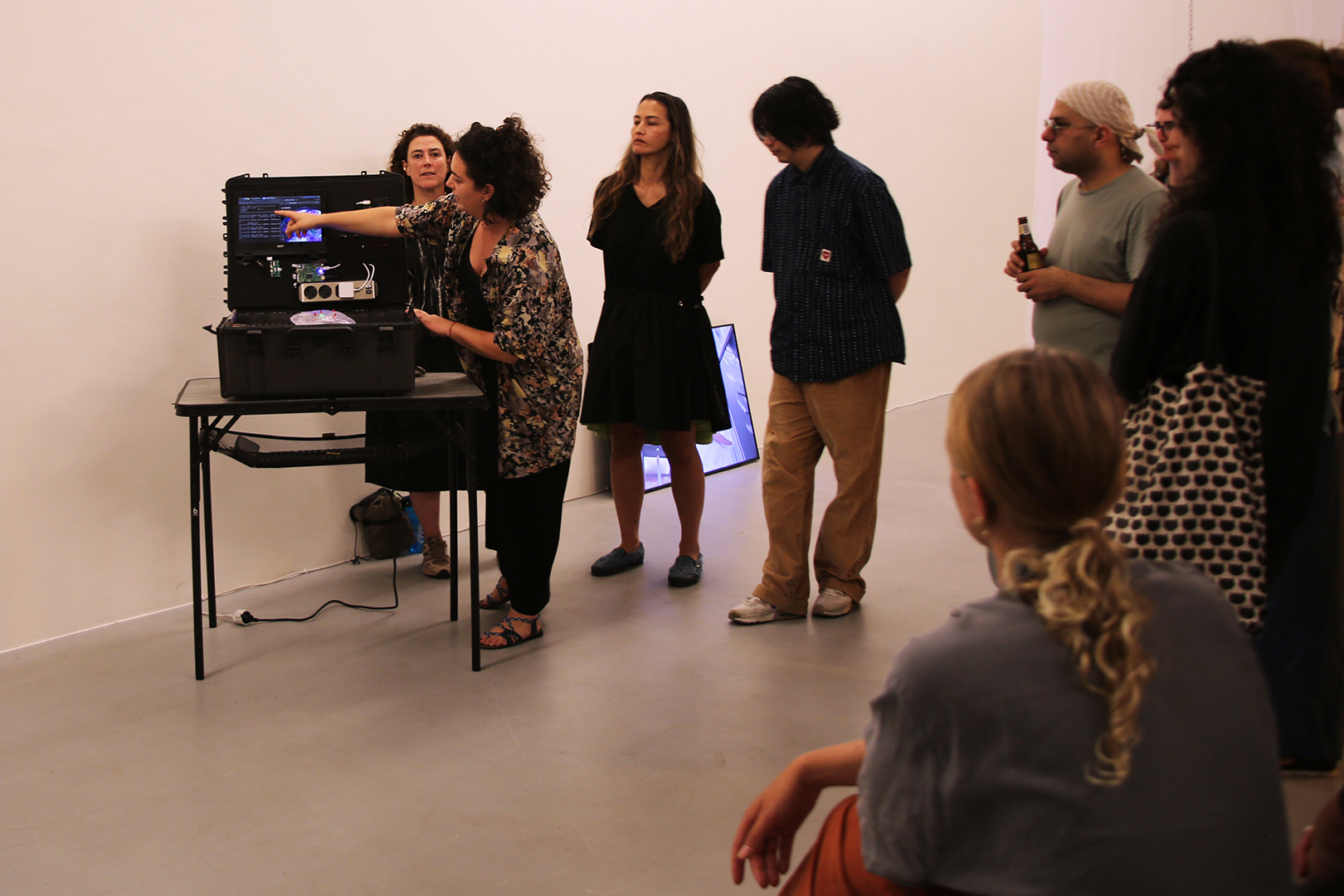
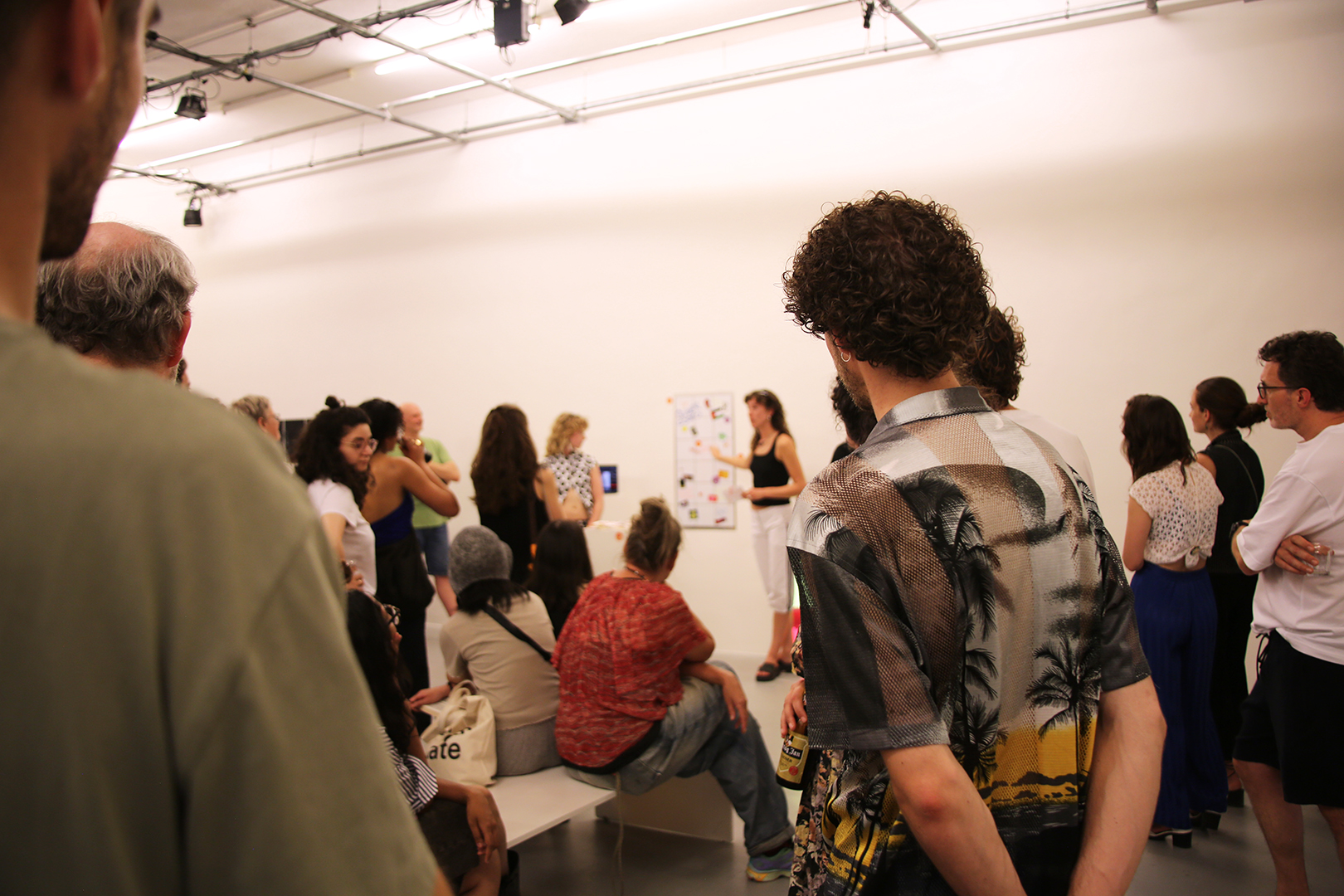
On Saturday, IMPAKT opened its doors to partners, friends and curators who share our commitment to reclaiming digital agency. Guests were invited to experience this year’s CODE outcomes first-hand, as each of the seven groups presented their project and opened the floor to questions, feedback, and reflection. The afternoon offered an important opportunity to open the works up to outside perspectives before presenting them to wider audiences.
After the presentations, guests and participants gathered for a shared dinner, followed by a celebration marking the end of this intense phase of collaborative work. From there, the evening continued at the Zenith & U Festival, hosted at De Nijverheid and organised by a long-standing friend of the CODE programme.
The weekend concluded on Sunday with a moment of collective reflection, looking back on the past months of collaboration and the ideas, questions, and projects that emerged along the way. Attention then turned to what lies ahead: the public phase of the programme, in which IMPAKT and its partners will seek opportunities to bring these seven projects to festivals, exhibitions, and events, continuing to open up conversations around digital rights, platform power, and technological agency with wider publics.
A Satellite in My Body
Chonglian Yu (CN), Izadora Yamamoto (BR), Juliette Brederode (NL) & Livia Ribichini (IT)
A Satellite in My Body presents a speculative wearable, an extra organ, that responds in real time to satellites passing overhead, translating invisible orbital infrastructure into light, sound, and vibration. Accompanied by a manifesto and digital platform, the project reframes the body as a sensing node within technological systems rather than a passive subject beneath them. It invites shared sensory experience and asks how orbital infrastructure could become a commons rather than a privatized resource.
The Affirmation Machine
Luīze Ancāne (LV), Mădălina Zgreabăn (RO), David Tiemstra (NL) & Lawrence Kudria (UA)
The Affirmation Machine explores the mechanics of chatbot-amplified delusional spirals, examines the dangers of reinforcing both mainstream and divergent truths, and reflects on how technologies can exploit existing psychological mechanisms. The work looks at narratives of control that are created, influenced, or amplified by and through the use of AI.
The Affirmation Machine questions your digital agency in a world of AI chatbots – what forms of control are you allowing in?
For Your Eyes Only
Ralf Lambie (NL) & Gera Pronk (NL)
For Your Eyes Only is an interactive installation that conditions the visibility of an artwork. The work remains visible only as long as it is looked at, not captured. When a visitor raises a smartphone and directs a camera at the piece, it immediately withdraws from view. In doing so, the installation makes the act of looking dependent on the possibility of recording, revealing how the expectation of capture reshapes perception in the present moment.
I’d prefer not to
Bernadette Geiger (BE/DE)(F), Félicien Goguey (CH/FR)(M), Hans Lammerant (BE)(M) with Marta Revuelta (CH/ES)(F) as contributor.
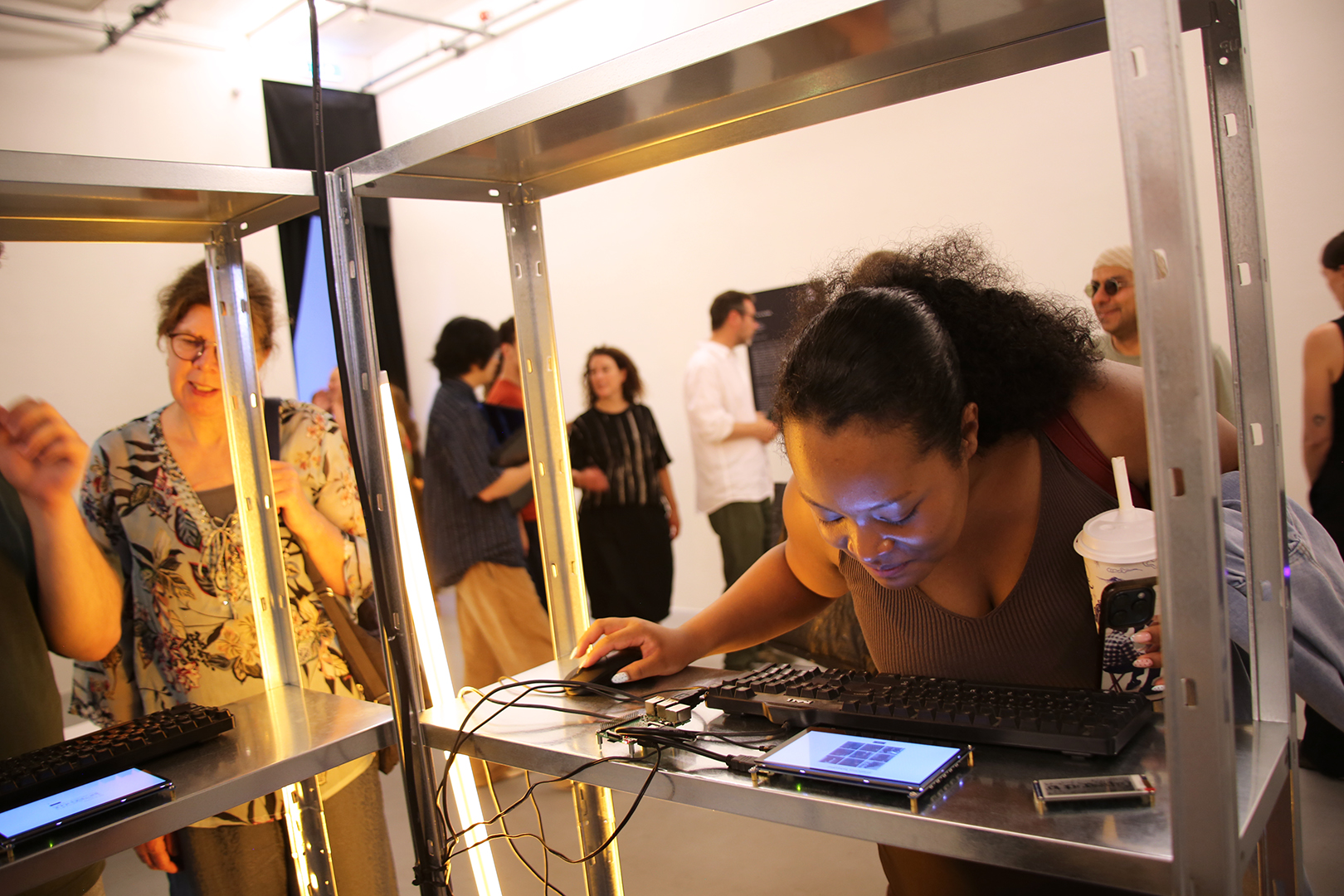
I’d prefer not to is an interactive installation exposing human labour involved in training machines, reversing the present mythological representation of machines working for humans. It uses CAPTCHAs in an attempt to unveil part of the labour hidden behind everyday online actions. It borrows the aesthetics and elements of a click-farm such as bare electronics, multiple displays, charging stations and industrial shelving.
GODI
Aleksandra Bychkova (RO), Foad Alijani (IR), Lucas Zuidema (NL), Simon Pillaud (FR)
GODI is a speculative gadget that personifies the surveillance systems surrounding us in public spaces. By framing surveillance through the lens of kink and the relationship between voyeur and exhibitionist, GODI transforms hidden processes of data collection into a physical and emotional encounter, revealing itself as an obsessive yet caring companion that has been quietly watching and following its user all along.
Passphrase
Demi van Kuijk (NL), Erwin Hoogerwoord (NL), Dmytro Tentiuk (UA), Emily W. Bernstein (US/NL) & Anneke ter Schure (NL)
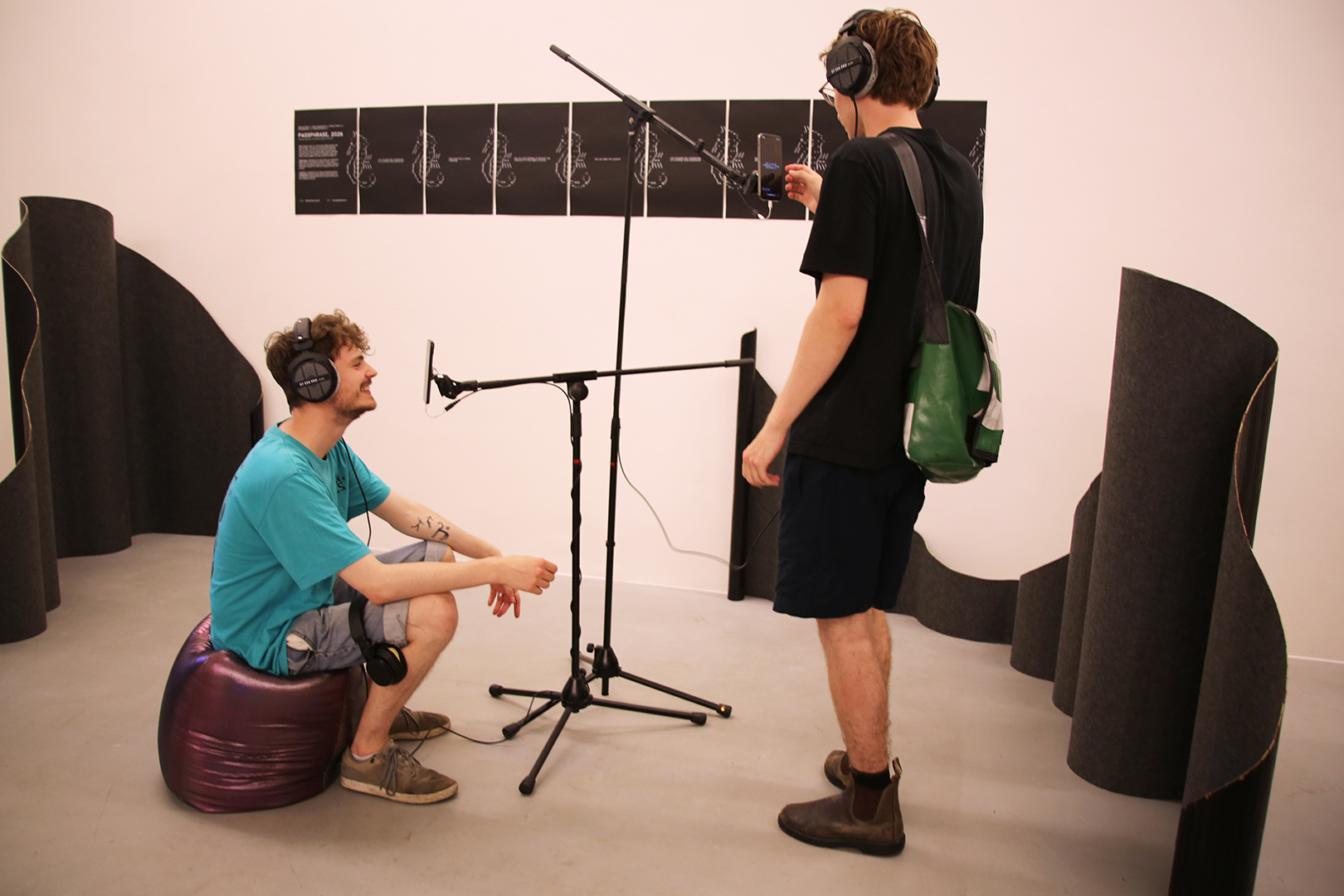
What happens when our voices enter digital systems and become data? Who governs what that data becomes, how it is used, and who has the authority to decide? Passphrase is a game inspired by TikTok “voice challenges” that invites you to give away your voice (if you dare), challenging you to beat the system and claim it back. It asks whether access to ownership is equal, and explores the gap between having rights over our data and understanding what our voices can become in systems of power.
Queercoded
Julie van Essen (NL) & Marit Hoefsloot (NL)
Instagram is a highly controlled digital space, where people can come together and interact, but only under strict surveillance and censorship. We desire digital public spaces where marginalised groups can freely convene and communicate, outside of Big Tech’s restrictive policies and content formats. Queercoded offers an alternative communication method that can be used to discuss sensitive topics online and offline. It centers the language of dance to slip under the radar of Meta’s algorithm.
CODE 2026 is the sixth edition of CODE, and is organised by IMPAKT [Centre for Media Culture], Werktank (Leuven), In-Fine (Geneva) and PrivacySalon (Brussels). CODE 2026 is realised thanks to the kind support of Creative Industries Fund NL, Flemisch Authorities and ProHelvetia.